
How Tradies Can Answer Every Call Without Hiring a Receptionist
You can't answer every call yourself, and hiring a receptionist isn't always practical. Here's how tradies are keeping up with calls without adding staff.
The Problem Every Tradie Knows
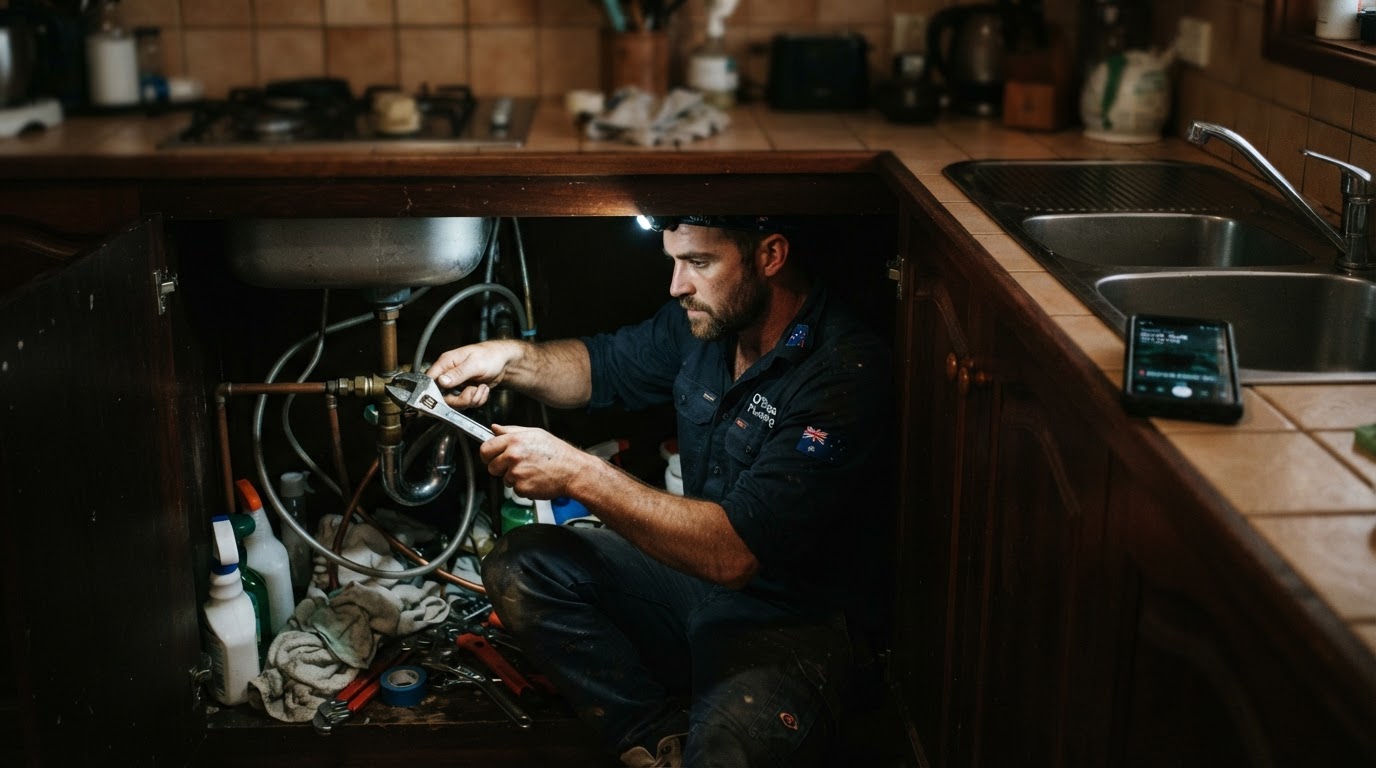
You're on a roof, under a sink, or driving between jobs. Your phone rings. You can't answer it safely, and by the time you check your messages, the caller has already moved on to the next business in the Google results.
Missing calls is part of running a trade business. But every missed call is a potential job that might go to a competitor. The challenge is finding a way to handle calls without hiring someone full-time to sit by the phone.
For a lot of small trade businesses, a receptionist isn't a realistic option. The cost of a salary, super, leave, and training is hard to justify — especially if you're a one-person operation or a small team. So what are the alternatives?
Option 1: Answer Calls Yourself
The most obvious approach is to answer every call yourself. The problem is that this isn't always possible — or safe. Taking a call while you're on a ladder, operating machinery, or in the middle of a pour isn't just inconvenient. It can be dangerous.
Even when it's safe to answer, stopping to take a call disrupts your workflow. You lose momentum on the job, the customer in front of you feels ignored, and the call itself is often rushed because you're trying to get back to work.
Answering every call yourself works when you're quiet, but it falls apart when you're busy — which is exactly when you need leads the most.
Option 2: Voicemail
Voicemail is the default fallback for most tradies. It's free, it's built into every phone, and it requires zero setup. But the reality is that most callers simply don't leave messages anymore.
When a customer reaches a voicemail greeting, they hang up and call the next business. They're not interested in waiting for a callback — they want help now. If you're relying on voicemail to capture leads, you're almost certainly losing jobs you'll never know about.
Voicemail has its place for messages from existing customers or suppliers, but as a lead capture tool, it's unreliable.
Option 3: A Traditional Answering Service
Answering services use real people to answer your calls and take messages. They're more effective than voicemail because a live person engages the caller, but they come with limitations.
First, they can be expensive. Most charge per call or per minute, which adds up quickly if you receive a decent volume of enquiries. Second, the operators don't know your business. They can answer basic questions, but they can't qualify leads, book appointments, or handle service-specific enquiries in a meaningful way.
An answering service is better than voicemail, but it's not the same as having a receptionist who understands your business.
Option 4: An AI Receptionist
An AI receptionist is a practical middle ground. It answers calls on your behalf, greets the customer, asks what they need, collects their details, and can book appointments or take messages — all without you having to hire staff.
Unlike a traditional answering service, an AI receptionist can be configured around your business. It knows your services, your service areas, your opening hours, and your booking process. It can qualify leads by asking the right questions, and it can transfer urgent calls through to your mobile when needed.
For a plumber, that might mean the AI asks whether it's a burst pipe or a routine booking, collects the suburb, and offers an available time slot. For an electrician, it might ask whether it's an emergency or a quote request and capture the property type. For a builder, it could ask about the project type and whether plans are ready.
The key point is that the caller gets a response immediately. They're not sent to voicemail, and they're not told to call back later. The enquiry is captured, and you can follow up when you're free.
What If You Don't Want AI Answering Every Call?
Some tradies prefer to answer calls personally and only want a backup for the ones they miss. That's a valid approach too.
If you don't want AI answering every call, you can use missed call text back instead. When a customer calls and you don't answer, they automatically receive an SMS asking how you can help. The customer can reply by text, and the conversation continues — without you having to call them back blindly.
It's a lighter-touch option that keeps the conversation alive without changing how you handle calls during the day. You can learn more about how it works in our guide to missed call text back.
The Goal Isn't to Replace You
None of these options are about replacing you or your team. The goal is to make sure that when a customer calls, someone — or something — is there to respond. A missed call doesn't have to mean a lost customer.
If you're tired of missing calls while you're on the tools and want a practical alternative to hiring a receptionist, explore how TradePA can help or get started today.