
The Importance of Google Reviews: How to Get More and Improve Your Google & AI Search Visibility
Google reviews do more than build trust — they shape how customers find and choose your trade business. Here's how to get more reviews and strengthen your visibility in Google and AI search.
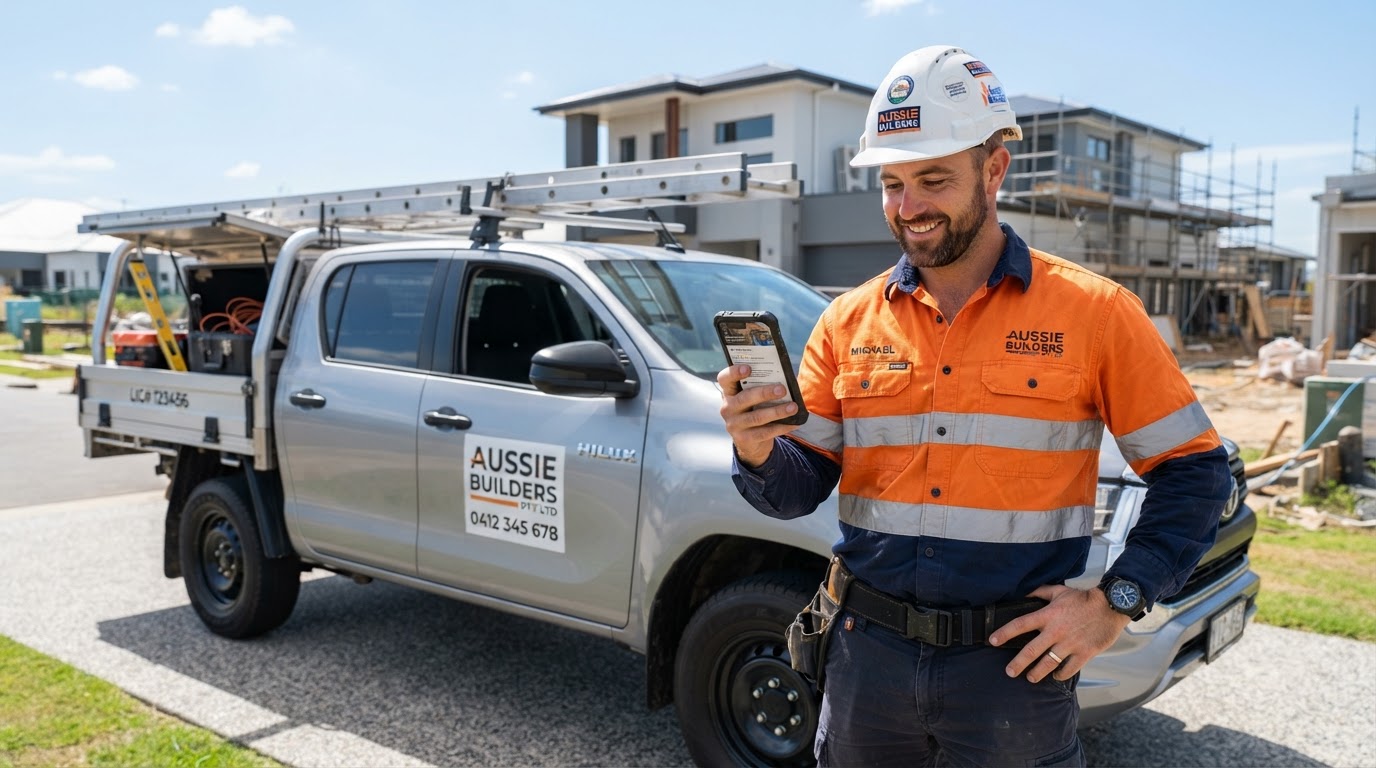
Why Reviews Are the New Word of Mouth for Tradies
When someone needs a plumber, electrician, concreter or tree lopper, they rarely just call the first number they see. They compare. They check who's nearby, who looks professional, and — most importantly — what other customers have said about them.
Your website matters. Your Google Business Profile matters. But reviews? Reviews often make the final decision. A potential customer scanning two similar businesses will almost always choose the one with more recent, detailed and genuine reviews.
Reviews also play another role that's becoming increasingly important: they're part of the information ecosystem that Google and AI-powered search experiences use to understand and recommend local businesses. This article explains why reviews matter, how to get more of them, and what they mean for your visibility in an evolving search landscape.
Why Google Reviews Matter for Local Businesses
Reviews serve two audiences at once — your potential customers and the search systems that help people find you.
From a customer's perspective, reviews provide social proof. They show that real people have used your services and lived to tell the tale. A business with 40 genuine reviews describing specific jobs — "arrived on time, fixed the burst pipe, cleaned up afterwards" — builds far more confidence than a business with three reviews or none at all.
- Social proof — customers trust other customers more than they trust marketing copy
- Credibility — a consistent review history shows your business is active and reliable
- Conversion — potential customers are more likely to call a business with strong reviews
- Standing out — in a crowded local market, reviews can be the deciding factor between you and a competitor
- Showing you're active — recent reviews tell customers the business is currently operating and taking on work
- Helping customers understand your services — reviews often describe exactly what you did and how it went
From a search perspective, Google has stated that local rankings are primarily based on three factors: relevance, distance and prominence. The number of reviews and positive ratings on your Business Profile can contribute to prominence. Reviews aren't the only factor, but they're a meaningful one.
Do Google Reviews Help Your Google Rankings?
This is one of the most common questions tradies ask, and the answer depends on what kind of ranking you're talking about.
There's a difference between traditional organic SEO — where your website ranks for keywords like "blocked drain plumber Sydney" — and local SEO, which is about your Google Business Profile appearing in the local pack and Google Maps results for nearby searches.
Reviews are particularly relevant to local SEO and Google Business Profile visibility. Google has confirmed that review count and rating are among the factors that can influence local prominence. However, having more reviews does not guarantee a number one ranking. No single factor does.
The broader local SEO picture includes:
- Relevance — how well your Business Profile matches what someone is searching for
- Distance — how close your business is to the person searching
- Prominence — how well-known and well-regarded your business is, including reviews
- Business Profile completeness — having your services, hours, photos and details filled in
- Business category — choosing the right primary category for your trade
- Website relevance — your website content aligning with your services and location
- Customer engagement — responding to reviews, answering questions and keeping your profile active
Think of it this way: reviews are one important ingredient in a larger recipe. A business with excellent reviews but an incomplete profile, no website and wrong opening hours will still struggle. But a business that gets the fundamentals right and builds a strong review profile gives itself the best possible chance of standing out locally.
Why the Quality of Reviews Matters — Not Just the Number
It's tempting to think the goal is simply to accumulate as many reviews as possible. But quality matters just as much — if not more — than quantity.
A review that says "Great service, would recommend" is nice. But a review that says "Mike came out within the hour, diagnosed the fault in our switchboard, explained everything clearly and had it fixed by lunchtime" is far more valuable. It describes the service, demonstrates expertise and gives future customers a clear picture of what to expect.
What makes a high-quality review profile:
- Genuine customer experiences — real feedback from real jobs
- Recent reviews — a profile with reviews from this month looks more active than one that stopped a year ago
- Detailed reviews — customers describing what was done, how it went and what they thought
- Reviews that name the service — "hot water system replacement", "switchboard upgrade", "exposed aggregate driveway"
- Natural language — reviews that sound like a real person wrote them, not a template
- Variety — a mix of different services, customer types and job sizes
- Consistent accumulation over time — a steady stream looks far more natural than a sudden flood
Businesses should never manufacture, buy or fake reviews. Google's policies are clear on this, and fake reviews can result in penalties that harm your visibility. Similarly, don't encourage customers to use specific keywords unnaturally — let them describe their experience in their own words.
How to Get More Google Reviews
Getting more reviews isn't complicated, but it does require a system. Here's a practical approach that works for trade businesses.
1. Ask at the Right Time
Timing is everything. The best moment to ask for a review is when the customer is happiest — usually right after a job well done.
- Immediately after completing a successful job
- When the customer compliments your work or says they're happy with the result
- After payment has been processed and the transaction is complete
- After sending a job completion message or thank-you text
- When a customer refers you to a friend or neighbour
2. Make the Process Extremely Easy
Customers are far more likely to leave a review if they don't have to search for your business on Google. A direct review link takes them straight to the review form with your business already selected.
You can create a review link through your Google Business Profile. Once you have the link, you can include it in text messages, emails, QR codes and invoices. The fewer steps between "happy customer" and "published review", the better.
3. Ask Personally
A personal ask is more effective than a generic one. When you or your team finish a job and the customer is happy, a natural request works best.
For example: "Thanks again for choosing us. If you're happy with the work, we'd really appreciate a quick Google review. It helps other local customers know who they can trust. I can text you the link if that's easier."
That last sentence matters — offering to send the link removes the friction of the customer having to find your business themselves.
4. Use SMS
An automated SMS sent shortly after a completed job is one of the most effective ways to generate reviews consistently. Text messages have high open rates, and a direct link in the message makes it effortless for the customer to tap through and leave a review.
The key is consistency — every completed job triggers a review request, not just the ones you remember to follow up on.
5. Use Email
Email can work well for businesses with longer customer journeys — builders, commercial contractors or businesses handling large quotes. A follow-up email after project completion, with a review link and a short thank-you, gives the customer an easy next step.
6. Use QR Codes
QR codes make review requests effortless in physical settings. Place them on:
- Invoices and quotes
- Business cards
- Work vehicles
- Job completion documents
- Counter cards for your office or showroom
A customer simply scans the code with their phone and they're taken directly to your Google review page. No searching, no friction.
7. Build Reviews Into the Normal Customer Journey
The goal isn't to occasionally remember to ask for reviews. The goal is to build review requests into your standard process so that every completed job automatically generates an opportunity for feedback.
When review requests become part of your workflow — not an afterthought — your review profile grows steadily and naturally over time.
How Many Google Reviews Should a Business Have?
There's no universal magic number. Anyone who tells you that you need exactly 50, 100 or 200 reviews to rank is oversimplifying.
A better approach is to compare your review profile against your direct local competitors. Look at:
- How many reviews do similar nearby businesses have?
- How recent are their reviews compared to yours?
- What's their overall rating?
- How detailed and genuine are their reviews?
- How consistently are they generating new reviews?
A business with 80 genuine reviews accumulated consistently over two years presents a very different — and far more trustworthy — profile than one that suddenly receives 40 reviews in a week. Consistency and authenticity matter more than raw numbers.
The aim should be steady, ongoing review generation that reflects the real volume of work you're doing. If you complete 20 jobs a month, even a 10% review rate would add two genuine reviews monthly — which compounds significantly over a year.
Why Responding to Google Reviews Matters
Responding to reviews isn't just good manners — it's a signal to both customers and Google that your business is active and engaged.
Responding helps you:
- Show potential customers that you're attentive and professional
- Demonstrate that you value feedback — positive and negative
- Handle complaints publicly and professionally, which can actually build trust
- Reinforce your business's commitment to customer service
- Keep your Business Profile active and engaged
Google recommends responding to reviews and notes that helpful replies can help a business stand out. Here's how to handle different types of reviews:
Responding to Positive Reviews
Keep it natural and specific. Don't use the same template for every review — customers can tell.
Example: "Thanks for the kind words, Sarah! Glad we could get the hot water system sorted quickly. Give us a call if you ever need anything else. — Tom and the team"
Responding to Neutral Reviews
Acknowledge the feedback and show you're listening. Even a three-star review is an opportunity to demonstrate professionalism.
Example: "Thanks for taking the time to share your feedback, John. We appreciate the honest review and we're always looking for ways to improve. If there's anything we can do for you in the future, please don't hesitate to reach out."
Responding to Negative Reviews
Negative reviews happen to every business. How you respond matters more than the review itself.
- Don't argue or get defensive
- Don't reveal private customer information or job details
- Acknowledge the concern genuinely
- Offer to resolve the issue privately — invite the customer to contact you directly
- Stay professional and calm, even if you feel the review is unfair
Example: "We're sorry to hear about your experience and we'd like the chance to make it right. Please give us a call on [phone number] or email [email] so we can look into this further. — TradePA Plumbing"
A thoughtful, professional response to a negative review can actually build trust with potential customers reading it. They see a business that takes feedback seriously and tries to resolve issues.
Can Google Reviews Help With AI Search Results?
This is where things are getting interesting. People are increasingly asking AI-powered search experiences questions like:
- "Who is the best plumber near me?"
- "Which electrician should I use?"
- "Who does emergency plumbing in my area?"
- "What's the best concreter for a driveway?"
- "Which local businesses have good reviews?"
AI-powered search needs reliable information about businesses to generate useful answers. That information comes from a variety of sources — your Google Business Profile, your website, your reviews, business directories and other publicly available references.
Google's own guidance states that generative AI experiences can include information about local businesses, and that maintaining a complete and accurate Google Business Profile can help businesses become visible in AI responses as well as traditional Search.
While there is no published formula showing exactly how individual Google reviews influence AI-generated recommendations, reviews are an important part of the publicly available information surrounding a local business. A strong, consistent and trustworthy online presence gives search systems more useful information about what a business does and how customers experience it.
In other words: you can't game AI search with a handful of five-star reviews. But a business with a genuine, well-maintained review profile, an accurate Business Profile and a clear website is giving every search system — traditional and AI — more reason to recommend it.
Reviews Are Part of Your Business's Digital Reputation
A modern business's reputation is no longer confined to word of mouth. A potential customer may encounter your business through multiple touchpoints before they ever pick up the phone:
- Google reviews and Google Maps
- Your website and its testimonials
- Facebook reviews and social media mentions
- Industry directories and local business listings
- Search results — traditional and AI-generated
Consistency across these touchpoints matters. If your website says "emergency plumber servicing the Sutherland Shire" and your reviews repeatedly mention "called after hours and arrived within the hour", that creates a stronger, more coherent picture of your business than a five-star rating alone.
When the information across your website, Business Profile and reviews tells the same story, it reinforces trust with both customers and search systems.
How to Build a Google Review System for Your Business
The most effective approach is to create a repeatable workflow that runs with every job, not just when you remember.
Here's what a practical review system looks like:
- Job completed — the work is finished and the customer is happy
- Review request — an automated SMS or email is sent with a direct Google review link
- Customer leaves a review — the customer taps the link and shares their experience
- You respond — you reply to the review promptly and professionally
- Reputation monitoring — you're notified of new reviews so nothing slips through
Automation can make this process consistent. TradePA helps Australian trade businesses automate customer follow-up and reputation management — including automated review requests, smart routing that sends happy customers to Google and unhappy customers to private feedback, and AI-assisted review responses. Explore TradePA's Review Management solution to see how it works.
Want to take reputation management further? See our guide to AI reputation management for tradies, which covers how AI can automate the entire review process — from request to response.
Common Google Review Mistakes Businesses Make
Avoiding these common pitfalls can save your review profile from stagnation — or worse, penalties.
- Only asking for reviews when you remember — inconsistency means most happy customers never get asked
- Asking once and never following up — a gentle reminder can significantly increase response rates
- Making customers search for your Google listing — if it's not a direct link, most won't bother
- Ignoring negative reviews — an unanswered negative review looks worse than a professionally handled one
- Using fake reviews — Google can detect and penalise businesses that manufacture reviews
- Buying reviews — paid review services violate Google's policies and can get your profile suspended
- Asking staff or friends to leave reviews when they weren't genuine customers — this violates Google's review policies
- Suddenly generating an unnatural volume of reviews — a sudden spike looks suspicious to both Google and customers
- Using identical review request messages every time — vary your approach so it feels personal
- Not monitoring reviews — you can't respond to reviews you don't know about
- Having inconsistent business information online — your name, address and phone number should match everywhere
Google Reviews FAQ
Here are answers to some of the most common questions tradies ask about Google reviews.
Do Google reviews help SEO?
Google reviews can contribute to local SEO and Google Business Profile visibility. Google has confirmed that review count and rating are among the factors that can influence local prominence. However, reviews are one of many factors — they don't guarantee rankings on their own.
Do Google reviews improve local rankings?
Reviews can contribute to local rankings as part of Google's prominence factor. But relevance (how well your profile matches the search) and distance (how close you are to the searcher) also play major roles. A strong review profile strengthens your overall local SEO, but it's not a standalone ranking guarantee.
How many Google reviews do I need?
There's no magic number. Compare your profile against direct local competitors and aim for a consistent, natural flow of genuine reviews. A business with 60 reviews accumulated steadily over time is generally in a stronger position than one with 20 reviews that all appeared in the same week.
How do I get more Google reviews?
The most effective approach is to ask at the right time (right after a completed job), make it easy (use a direct review link), and build the request into your standard workflow so it happens consistently. SMS follow-ups and QR codes can significantly increase response rates.
Can I ask customers for Google reviews?
Yes. Google allows businesses to ask customers for reviews. What's not allowed is offering incentives in exchange for reviews, writing fake reviews, or selectively asking only happy customers while discouraging unhappy ones from reviewing.
Can I offer customers something in exchange for a review?
No. Google's review policy prohibits offering incentives — including discounts, gifts or payments — in exchange for reviews. Reviews must be genuine and unsolicited in terms of compensation.
Should I respond to every Google review?
Responding to reviews — positive and negative — shows that your business is active and engaged. Google recommends responding to reviews, and helpful replies can help your business stand out. You don't have to write a long response to every review, but acknowledging feedback consistently is good practice.
Do negative Google reviews hurt my business?
A negative review isn't ideal, but a thoughtful, professional response can actually build trust with potential customers reading it. What hurts more is ignoring negative reviews entirely. Address the concern, offer to resolve it privately, and move on.
Do Google reviews help with AI search?
Reviews are part of the publicly available information that AI-powered search experiences can use to understand and recommend local businesses. While there's no published formula linking individual reviews to AI search results, maintaining a strong, consistent and genuine online presence — including reviews — gives AI search systems more useful information about your business.
Can AI use Google reviews when recommending businesses?
Google has indicated that generative AI experiences can include information about local businesses. Reviews, Business Profile details and website content all contribute to the publicly available information AI systems can draw on. A well-maintained review profile helps ensure that information is accurate and positive.
How often should I ask customers for reviews?
Ideally, after every completed job. The key is consistency — building review requests into your standard customer journey so that every happy customer gets an easy opportunity to leave feedback.
What is the easiest way to get more Google reviews?
Automate the process. Use a system that sends a review request via SMS or email after every completed job, with a direct link to your Google review page. The less friction for the customer, the more likely they are to follow through. TradePA's Review Management solution automates this entire process for Australian tradies.
Your Next Google Review Could Be Sitting in Your Customer Database Right Now
The easiest way to build a strong review profile is to make asking for feedback part of the normal customer journey — not an occasional afterthought.
Every completed job is a potential review. Every happy customer is a potential advocate. The businesses that win the review game aren't doing anything magical — they've just built a system that consistently asks, makes it easy and responds professionally.
TradePA helps Australian service businesses automate customer follow-up and reputation management. From automated review requests to smart routing and AI-assisted responses, TradePA can help you turn completed jobs into a steady stream of genuine Google reviews — without adding admin to your day.
Ready to make reviews part of your workflow? Explore TradePA's Review Management solution and see how it works for your trade business.